about

project archive

book a time

Galaxa

Product, Brand Design and Strategy, UX/UI Research

🏆 Frost* Prize Winner | 🏙️ Urban Planning | 🚺 Women's Safety

6 months | Feb - Aug 2024

The Challenge:

1 in 5 women feel unsafe in public spaces post-pandemic, yet councils lack data on where to invest in improvements. Traditional safety apps create "danger zones" that increase fear rather than confidence.

The Solution:

An astronomy-themed exploration app that reframes safety through environmental transparency, helping women navigate confidently while crowdsourcing actionable council feedback.


This project was awarded the 2024 Frost* Prize “as an excellent solution to the real-world problem of women’s safety resolved in an eloquent way…The project could be rolled out tomorrow with a net benefit to the community”.

Key Features & Highlights

LOADING SLIDES...
LOADING SLIDES...
LOADING SLIDES...
LOADING SLIDES...

Project Scope

If design projects were movies, Galaxa would be a trilogy series. Galaxa’s development is split into three segments: 


  • research and scoping of the problem space,

  • wireframing and developing a hi-fi prototype of the solution, 

  • and testing and validating the solution to a potential market.


This case study focuses on developing the hi-fi prototype, which spanned across 3 to 4 months of development.

Problem Space

This is an overview of problem scope research from Phase 1.

In a survey by Plan International Australia, one in five women and gender-diverse people felt unsafe post-pandemic in public spaces. And of those women with disabilities, more than one in four felt more unsafe (Source: ABC News).


However, public spaces, including waiting areas such as bus stops and train stations, were designed without women’s perceptions of safety in mind. Local councils require insight into which areas need financial investment to improve public spaces, despite difficulty in obtaining holistic, accurate information on women’s perceptions of safety in public spaces (particularly from young women, women from lower socioeconomic areas, or those for whom English is a second language). 

Simultaneously, there is a struggle for women to find and discover new places quickly due to the overwhelming amount of options, alongside a resistance to exploring due to fear of safety.

Project Scope

If design projects were movies, Galaxa would be a trilogy series. Galaxa’s development is split into three segments: 


  • research and scoping of the problem space,

  • wireframing and developing a hi-fi prototype of the solution, 

  • and testing and validating the solution to a potential market.


This case study focuses on developing the hi-fi prototype, which spanned across 3 to 4 months of development.

Problem Space

This is an overview of problem scope research from Phase 1.

In a survey by Plan International Australia, one in five women and gender-diverse people felt unsafe post-pandemic in public spaces. And of those women with disabilities, more than one in four felt more unsafe (Source: ABC News).


However, public spaces, including waiting areas such as bus stops and train stations, were designed without women’s perceptions of safety in mind. Local councils require insight into which areas need financial investment to improve public spaces, despite difficulty in obtaining holistic, accurate information on women’s perceptions of safety in public spaces (particularly from young women, women from lower socioeconomic areas, or those for whom English is a second language). 

Simultaneously, there is a struggle for women to find and discover new places quickly due to the overwhelming amount of options, alongside a resistance to exploring due to fear of safety.

The Challenge:

The Challenge:

The Challenge:

How can we support women’s perception of safety when navigating public spaces, while helping the institutions that own these spaces improve them through well-informed decisions?

The Approach

Following Phase 1 concept development, my interest in astronomy and a precedent of star navigation as a traditional form of wayfinding in earlier cultures, I developed a digital application that playfully explores the narrative of space exploration, but in the context of public and third spaces. Rather than a conventional safety app that gave red danger zones that could harm women’s feeling of safety, I treated the experience as an opportunity to see what’s within the space you’re navigating ahead.


This star navigation metaphor permeates through every design decision made, including:


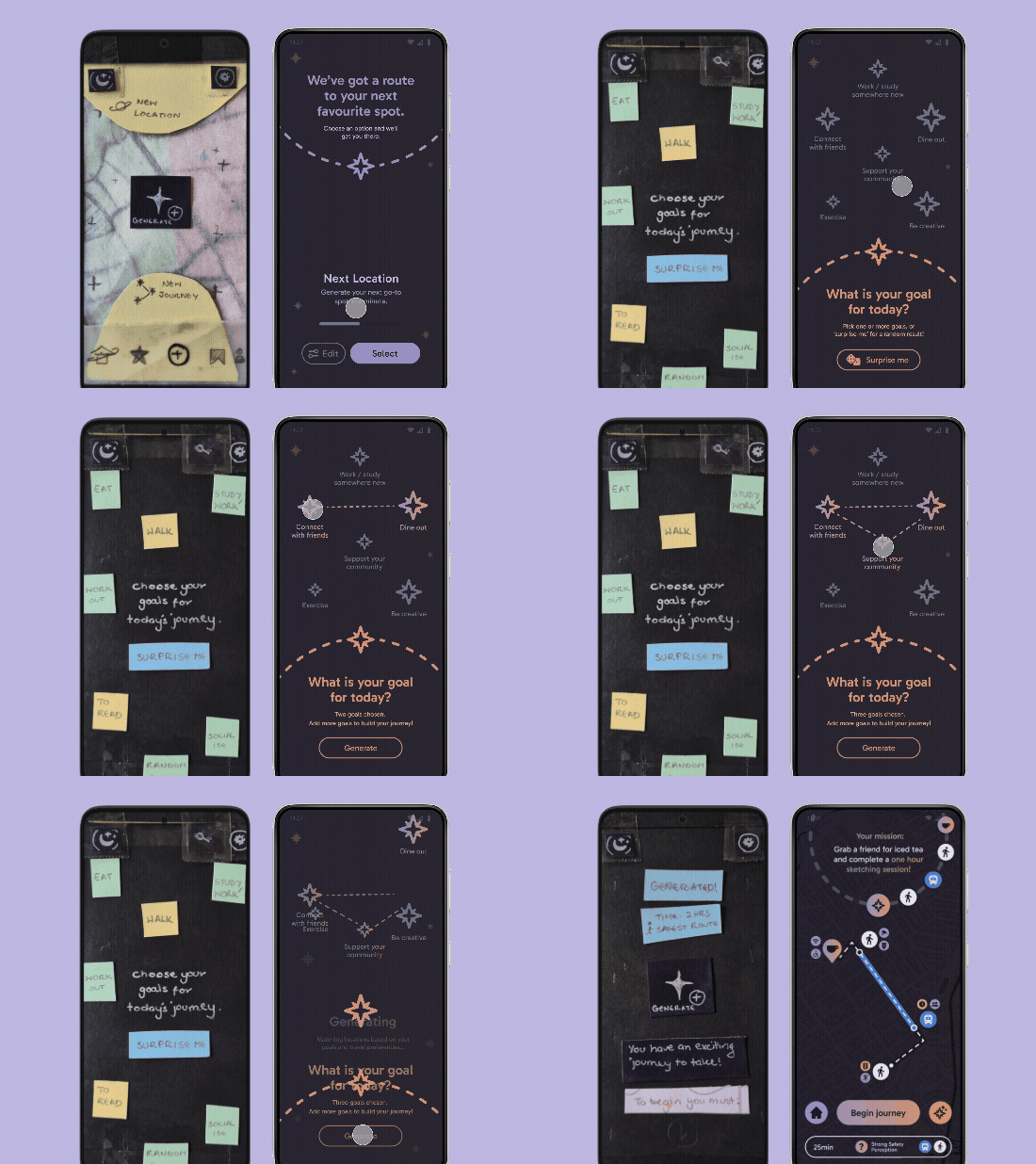
  • The use of gestural swipes to mimic movement in space, providing accessibility.


  • Creating environmental signals in the form of ‘moons’ within a route or place.


  • Orbiting movements when navigating multiple steps within a route.


  • The integration of the Northern Star, symbolising navigation and guidance, the defining feature of the logotype.


By creating a system that offers exploration with a confident understanding of the environment through captivating design, this would align with the proposed conceptual framework I developed in Phase 1, aiming to consider how to “focus on creating tranquillity for users and encourage immersion within their community spaces, encouraging increased and prolonged participation” (Cunha, 2024).


Combined with accessible solutions to ‘escape’ or move away from unsafe or uncomfortable public spaces, or explore safe new ones, the integrated ability to review these public spaces could give more opportunity for increased and consistent feedback, which can support council decisions on how to improve them. 

Process Summary and Key Design Decisions


Process Summary and Key Design Decisions


"Moons" as Environmental Signals

WHY

Perception of safety is subjective, but multiple academics noted common environmental signals (e.g. quality lighting, cleanliness, crowds) impact women's assessment of safety in their environment.

HOW

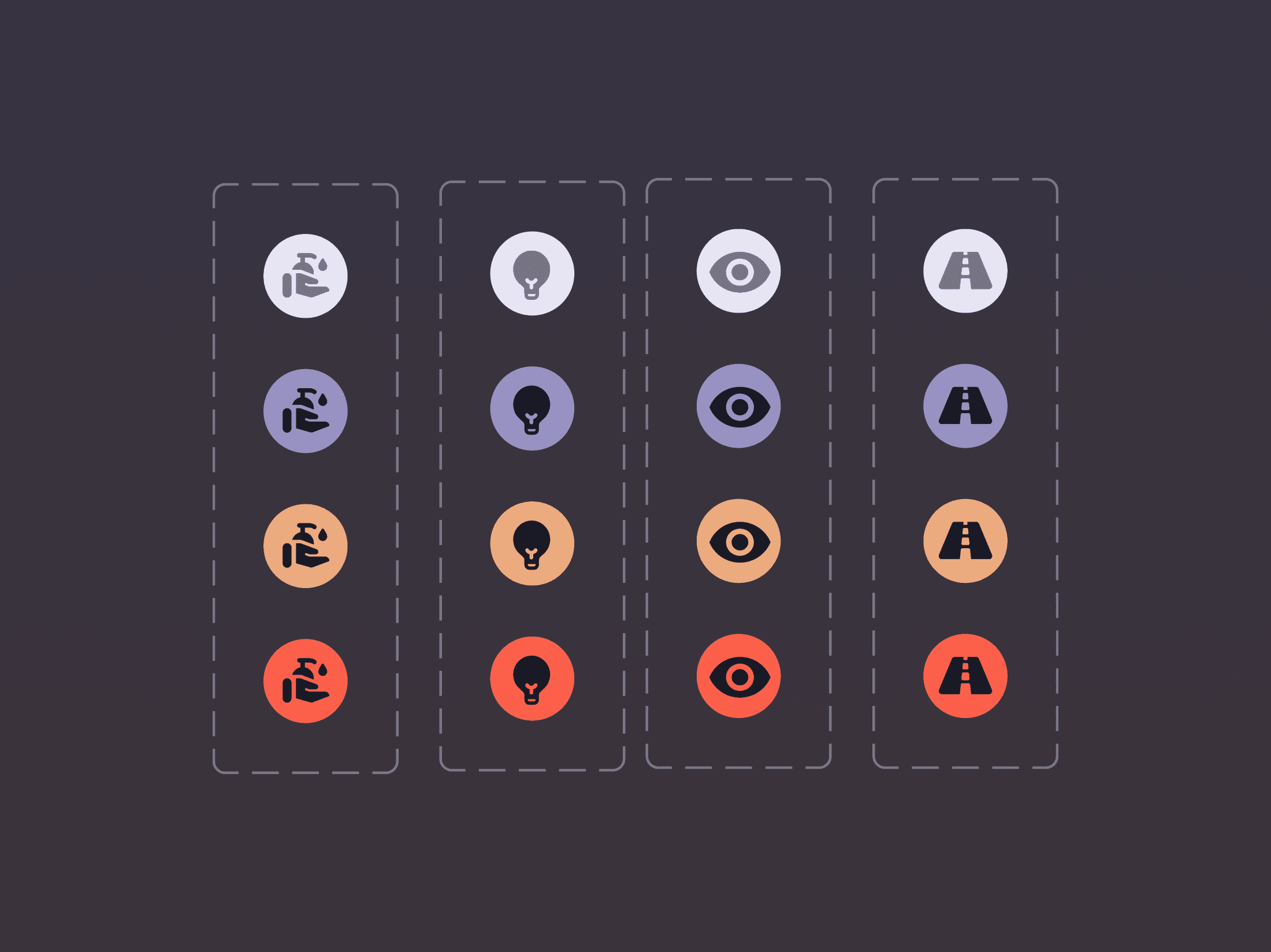
I developed a library of 'moons' - icons representing environmental factors rated by colour (purple, yellow, red) to signify the quality of key factors of a particular street or mode of transport.

IMPACT

In comparison to a typical Google Maps overview, though it took longer for users to decide, 85% of testers felt more informed and confident about the provided route.

Astronomy Motif

WHY

Traditional safety apps create "red zones" that offer insight, but increase fear. I needed a system that encouraged exploration, not avoidance. Additionally, research reveals that Northern Stars were traditional symbols of wayfinding for lost explorers.

HOW

I developed a brand identity and colour scheme mimicking space navigation, a playful interpretation of treating public spaces as a universe to be explored.

IMPACT

User testing confirmed this framing reduced anxiety compared to conventional danger-rating systems, offering a seamless and non-confronting experience.

Gestural Navigation

WHY

Galaxa's goal is to be accessible for all ages, backgrounds and physical capabilities. Alongside language, I factored in use cases of short-term and long-term disabilities, such as users on the go, mothers and hand impairments (injury or chronic illness).

HOW

Using paper prototyping, I experimented and created a mental model likened to space navigation, focusing on gestural swipes for multiple user scenarios. Also ensured colours were accessible to colour blind users.

IMPACT

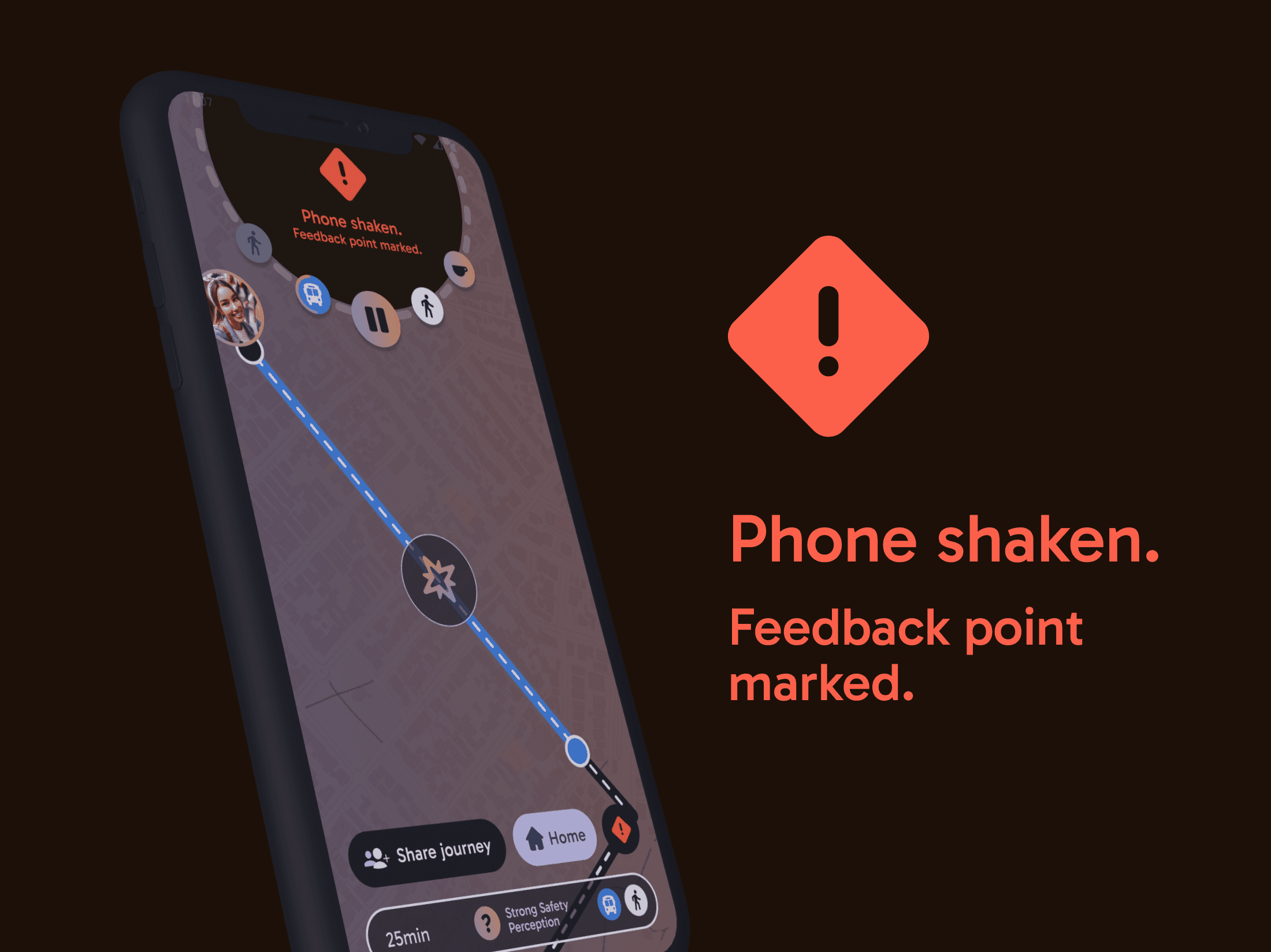
Not only did it support the astronomy narrative, but it offered a functional solution to users wanting to provide feedback on the go using haptic feedback.

"Moons" as Environmental Signals

WHY

Perception of safety is subjective, but multiple academics noted common environmental signals (e.g. quality lighting, cleanliness, crowds) impact women's assessment of safety in their environment.

HOW

I developed a library of 'moons' - icons representing environmental factors rated by colour (purple, yellow, red) to signify the quality of key factors of a particular street or mode of transport.

IMPACT

In comparison to a typical Google Maps overview, though it took longer for users to decide, 85% of testers felt more informed and confident about the provided route.

Astronomy Motif

WHY

Traditional safety apps create "red zones" that offer insight, but increase fear. I needed a system that encouraged exploration, not avoidance. Additionally, research reveals that Northern Stars were traditional symbols of wayfinding for lost explorers.

HOW

I developed a brand identity and colour scheme mimicking space navigation, a playful interpretation of treating public spaces as a universe to be explored.

IMPACT

User testing confirmed this framing reduced anxiety compared to conventional danger-rating systems, offering a seamless and non-confronting experience.

Gestural Navigation

WHY

Galaxa's goal is to be accessible for all ages, backgrounds and physical capabilities. Alongside language, I factored in use cases of short-term and long-term disabilities, such as users on the go, mothers and hand impairments (injury or chronic illness).

HOW

Using paper prototyping, I experimented and created a mental model likened to space navigation, focusing on gestural swipes for multiple user scenarios. Also ensured colours were accessible to colour blind users.

IMPACT

Not only did it support the astronomy narrative, but it offered a functional solution to users wanting to provide feedback on the go using haptic feedback.

Astronomy Motif

WHY

Traditional safety apps create "red zones" that offer insight, but increase fear. I needed a system that encouraged exploration, not avoidance. Additionally, research reveals that Northern Stars were traditional symbols of wayfinding for lost explorers.

HOW

I developed a brand identity and colour scheme mimicking space navigation, a playful interpretation of treating public spaces as a universe to be explored.

IMPACT

User testing confirmed this framing reduced anxiety compared to conventional danger-rating systems, offering a seamless and non-confronting experience.

"Moons" as Environmental Signals

WHY

Perception of safety is subjective, but multiple academics noted common environmental signals (e.g. quality lighting, cleanliness, crowds) impact women's assessment of safety in their environment.

HOW

I developed a library of 'moons' - icons representing environmental factors rated by colour (purple, yellow, red) to signify the quality of key factors of a particular street or mode of transport.

IMPACT

In comparison to a typical Google Maps overview, though it took longer for users to decide, 85% of testers felt more informed and confident about the provided route.

Gestural Navigation

WHY

Galaxa's goal is to be accessible for all ages, backgrounds and physical capabilities. Alongside language, I factored in use cases of short-term and long-term disabilities, such as users on the go, mothers and hand impairments (injury or chronic illness).

HOW

Using paper prototyping, I experimented and created a mental model likened to space navigation, focusing on gestural swipes for multiple user scenarios. Also ensured colours were accessible to colour blind users.

IMPACT

Not only did it support the astronomy narrative, but it offered a functional solution to users wanting to provide feedback on the go using haptic feedback.

The Outcome

Galaxa is an inclusive and accessible digital application empowering woman-identifying users to share their experiences in public/third spaces while inspiring new ways of interacting with them. Combining UX/UI principles with an astronomy-themed brand identity, it encourages users to explore spaces within their reach and share their experiences through a crowdsourcing model, encouraging exploration, community support and independent agency for woman-identifying users in navigating the world around them while streamlining the co-designing process between women, gender-diverse people, and their local councils in improving these spaces.


Ultimately, Galaxa resolves the core problem with improving public spaces through its unique visual metaphor: helping women to navigate the public spaces around them and actually talk about their experiences.

User Validation:

→ 5 out of 6 final testers felt more confident exploring new routes, preferring the new design over typical Google/Apple maps overviews.

→ Reduced safety assessment from 6+ factors to 3 visual indicators.

→ Accessibility: Passed tests for Achromatopsia, Tritanopia, Protanopia.

Next Steps:

I'm continuing to consider the go-to-market strategy for Galaxa, and am working with a software engineer (and supporting through vibe coding) to develop the technical MVP.

Industry Recognition:

→ 2024 Frost* Prize: "An excellent solution... ready to deploy tomorrow"

→ Top 9 Finalist, UNSW Founders New Wave program

User Validation:

→ 5 out of 6 final testers felt more confident exploring new routes, preferring the new design over typical Google/Apple maps overviews.

→ Reduced safety assessment from 6+ factors to 3 visual indicators.

→ Accessibility: Passed tests for Achromatopsia, Tritanopia, Protanopia.

Next Steps:

I'm continuing to consider the go-to-market strategy for Galaxa, and am working with a software engineer (and supporting through vibe coding) to develop the technical MVP.

Industry Recognition:

→ 2024 Frost* Prize: "An excellent solution... ready to deploy tomorrow"

→ Top 9 Finalist, UNSW Founders New Wave program

User Validation:

→ 5 out of 6 final testers felt more confident exploring new routes, preferring the new design over typical Google/Apple maps overviews.

→ Reduced safety assessment from 6+ factors to 3 visual indicators.

→ Accessibility: Passed tests for Achromatopsia, Tritanopia, Protanopia.

Next Steps:

I'm continuing to consider the go-to-market strategy for Galaxa, and am working with a software engineer (and supporting through vibe coding) to develop the technical MVP.

Industry Recognition:

→ 2024 Frost* Prize: "An excellent solution... ready to deploy tomorrow"

→ Top 9 Finalist, UNSW Founders New Wave program

User Validation:

→ 5 out of 6 final testers felt more confident exploring new routes, preferring the new design over typical Google/Apple maps overviews.

→ Reduced safety assessment from 6+ factors to 3 visual indicators.

→ Accessibility: Passed tests for Achromatopsia, Tritanopia, Protanopia.

Industry Recognition:

→ 2024 Frost* Prize: "An excellent solution... ready to deploy tomorrow"

→ Top 9 Finalist, UNSW Founders New Wave program

Next Steps:

I'm continuing to consider the go-to-market strategy for Galaxa, and am working with a software engineer (and supporting through vibe coding) to develop the technical MVP.

The Reflection

Galaxa demonstrated the crucial role that brand storytelling and implementing unique design components play in enhancing the user experience within product design. Here are my key takeaways from the project:


  • Similar to research, feedback is continuously undertaken. Across the project, I took the initiative to engage with a government lead, receive mentorship from a PhD researcher from XYX Labs in Melbourne, and from a manager from Georges River Council, alongside a survey of 40+ users and 6 prototype testers. With this, I continuously received feedback from various perspectives that kept my project grounded and true to the problem. It helped me to validate my theories and concerns, and set limitations that allowed me to be creative in solving the real user issue, such as providing feedback, and deciding to go to a place.


  • Accepting that the design thinking stages are completely non-linear and abstract. My initial project plan was conducted assuming the linear structure of the design thinking stages. One day, I felt like I was in the prototyping stage, and the next I was back to empathising and gathering more research. It did not mean I dropped progress, but meant that I challenged my initial knowledge through feedback and iteration, prioritising validation from stakeholders confirm my theories.


  • Setting realistic scopes for a three-month project. Where I initially planned a full application design for both a user and a council stakeholder, I realised how large and excessive the scope would be, and by stretching too thin, the outcome would not have been as effective.


  • Thinking long-term in the go-to-market strategy. Having a public relations background, I regularly critiqued the framing of my interactions and their implications. For example, a ‘bad’ perception of safety on a route is highly subjective. Would this fearmonger women rather than support their desire to explore? This is what I’m exploring through continued development into an MVP launch and go-to-market strategy for Phase 3.


Carina C. Cunha. All rights reserved, 2026.

Stack used to build this website:

Book a call to see how we can work together :)

Carina C. Cunha. All rights reserved, 2026.

Stack used to build this website:

Book a call to see how we can work together :)

Carina C. Cunha. All rights reserved, 2026.

Stack used to build this website:

Book a call to see how we can work together :)

Carina C. Cunha. All rights reserved, 2026.

Stack used to build this website:

Book a call to see how we can work together :)